Tuesday, November 15, 2022

Old Blog, New Blog

 I haven't looked at this blog in a long time. A VERY long time. Nine years. Not because I had nothing to say, but because I was busy pursuing other interests. Now things have changed (thanks, pandemic!) and I'm considering restarting my little scribblings to see what comes of it. 

I'll need to make a few changes. Like that profile picture. Was my hair ever that dark? And was I ever that slender? I don't recall. I'll certainly bring that up to date. The current picture is a headshot from my now-mothballed acting career. Handsome, but not really what I look like now.

And a lot of other things have changed. Like I'm no longer appearing in local donut and carpet commercials. I have moved on. I'll bring you up to date on the current state of my life as the situation warrants. Meanwhile, how are you? Does anyone still follow me on Blogspot? Drop me a note!


Until later,


Mark 

Saturday, March 9, 2013

Water Sucking Practice

At six this morning, an alarm went off in our house. I've heard the burglar alarm--there was the time I came home in the dark and couldn't find my glasses to disarm the system. I heard the smoke alarm last time I made homemade pizza. But I had never heard this particular sound before. I consulted the LED panel: "Water Alert."

Wha?

We've had quite a lot of snow and rain recently. More than I realized, in fact. The water table is unusually high, and this morning my nice less-than-five-years-old basement was wet, Really wet.

So I got out the wet/dry vacuum and used it wet--possibly for the very first time. I can't remember ever doing it before. I filled it up pretty fast, and that's when I remembered that a gallon of water weighs eight pounds. So that means a 20 gallon shop vac full of rain water weighs--what? 160 lbs., that's what.

What fun.

I've been working with Lojong slogans the last few weeks, thanks to Norman Fischer's terrific new book, Training In Compassion: Zen Teachings on the Practice of Lojong. I don't intend this to be a discussion of Zen adaptation and adoption of this Tibetan teaching, interesting as that might be. Rather, I want to talk about a couple of those slogans from the standpoint of one who has been sucking up water for the last ten hours.

Slogans 11 and 12 are: Turn all mishaps into the path, and Drive all blames into one. (I see #12 as just a variant or refinement of #11.)

A Zen way of saying Turn all mishaps into the path might be "Your best teacher is always in front of you." So how should I vacuum up a cellar full of water with this attitude in mind? Put down opinions, for one thing. Don't bother about what is "good" or "bad." Just work. Just do what's in front of you without any idea of gaining something. That was actually easier than it sounds, once I realized that in fact there was no "gaining." As soon as I vacuumed up water, it came right back again. I haven't gained anything that I can see.

Drive all blames into one. Why did we build this house with a basement? I didn't exactly oppose the idea, but I did question it. We live next to the ocean. How would we ever keep the place dry? Oh, it's going to be totally waterproof, I was told. No problem. Technology is wonderful You'll see!

I also wanted gutters on this house, but was told they were aesthetically undesirable. They were simply too ugly for the style of house, and besides they were unnecessary, as I had already been told.

None of the people who told me these things five years ago was available this morning to help vacuum up the water, of course. I'm sure they're busy all afternoon as well. So I have plenty of opportunity for blame. But the slogan tells me that the real blame (if there can be such a thing) rests with my opinions and preferences and my inability to find some good in this situation.

Some good? What good can possibly come from this? What is there to be learned from using my whole Saturday sucking up water?

The answer is Patience. Norman Fischer calls patience "my all-time favorite spiritual quality." We might imagine there has to be some easier way to learn patience, but there really isn't. The only way to increase patience is to run right up to the edge of our limits and take one step over that line for a while.

Mission accomplished.

Actually, it's continuing.

Friday, February 8, 2013

What I'm Reading Now

I always have several books going at once. I've done this for as long as I can remember. Maybe it's a sort of literary ADD. I don't know. Anyway, the Kindle is a great invention for me. Here's what's on my ereader right now, in no particular order:

Freethinkers: a History of American Secularism, by Susan Jacoby
Moby Dick, by Herman Melville
Leaves of Grass by Walt Whitman
The Woman's Bible, by Elizabeth Cady Stanton
The Bhagavad Gita, trans. by Stephen Mitchell

Books are great. Ebooks are awesome!

Tuesday, May 1, 2012

Jianzhi Sengcan, Third Zen Patriarch (Part 3)


"To deny the reality of things is to miss their reality; to assert the emptiness of things is to miss their reality. The more you talk and think about it, the further astray you wander from the truth. Stop talking and thinking and there is nothing you will not be able to know."


From Hsin Hsin Ming - verses on the faith mind of Sengstan (Sosan) 3rd Zen Patriarch, translated from the original Chinese by Richard B. Clarke, Zen teacher at the Living Dharma Centers, Amherst, Massachussets and Coventry, Connecticut. (Source: Deeshan.com, tip o' the hat to David Lawrence.)

Monday, April 30, 2012

Jianzhi Sengcan, Third Zen Patriarch (Part 2)


"When the deep meaning of things is not understood the mind's essential peace is disturbed to no avail. The way is perfect like vast space where nothing is lacking and nothing is in excess. Indeed, it is due to our choosing to accept or reject that we do not see the true nature of things. Live neither in the entanglements of outer things, nor in inner feelings of emptiness. Be serene without striving activity in the oneness of things and such erroneous views will disappear by themselves. When you try to stop activity to achieve passivity your very effort fills you with activity. As long as you remain in one extreme or the other you will never know Oneness. Those who do not live in the single Way fail in both activity and passivity, assertion and denial."


From Hsin Hsin Ming - verses on the faith mind of Sengstan (Sosan) 3rd Zen Patriarch, translated from the original Chinese by Richard B. Clarke, Zen teacher at the Living Dharma Centers, Amherst, Massachussets and Coventry, Connecticut. (Source: Deeshan.com, tip o' the hat to David Lawrence.)

Sunday, April 29, 2012

Jianzhi Sengcan, Third Zen Patriarch (Part 1)


"The Great Way is not difficult for those who have no preferences. When love and hate are both absent everything becomes clear and undisguised. Make the smallest distinction, however, and heaven and earth are set infinitely apart. If you wish to see the truth then hold no opinion for or against. The struggle of what one likes and what one dislikes is the disease of the mind."


From Hsin Hsin Ming - verses on the faith mind of Sengstan (Sosan) 3rd Zen Patriarch, translated from the original Chinese by Richard B. Clarke, Zen teacher at the Living Dharma Centers, Amherst, Massachussets and Coventry, Connecticut. (Source: Deeshan.com, tip o' the hat to David Lawrence.)

Tuesday, January 17, 2012

Letter from Prison

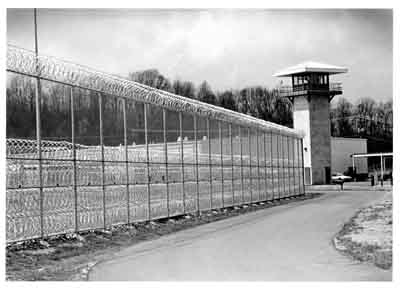
"Prison Dharma" became a major part of my practice in 2011. I started volunteering in a local facility in April, teaching meditation to prisoners. This started out with me thinking, "I will teach them, and they will earn from me." How wrong I was. I have learned far more from time spent meditating with these men than they could possibly have learned from me.


I began writing to an incarcerated man in June. My teacher, Zen Master Bon Haeng (Mark Houghton) had received a letter from an inmate asking for Zen teaching, which he simply did not have time to answer. "You're doing prison dharma already--why don't you write to this person?" he said. So I agreed to try my hand. 


That correspondence grew. The prisoner and I have exchanged more than a dozen letters. It's been very instructive and rewarding.


Then word reached the powers-that-be at the Kwan Um School of Zen (my school) that I would reply to letters from people in prison. Now I keep regular correspondence with ten or twelve men. I send them books (when the facility's rules allow it), answer their questions if I can, and offer encouragement to people who, in some cases, are probably going to die in prison. 


The latest development is a new program we started at one of our local facilities to bring Asian-born and -trained monks into the facility. There's a sizable Asian population in US prisons, and many of these people identify as Buddhists. But in most places, there's very little in the way of religious support for these prisoners. (Jesus runs the show in the majority of American prisons.) 


The lay practice of Buddhism in Asia consists (mostly) of offering material support to  monks and nuns in their daily activities; few people in Asia actually meditate, chant, etc. themselves, relying on their accumulated "merit" to give them a good rebirth in their next life, at which time they hope they will be able to practice themselves. When we began teaching generic mindfulness meditation in April, the Asian men came around, took a look, and said, "Very nice, but do you think we can get a monk to come in?" So we began to look into it.


Last week, we brought the first monk into the facility. A dozen men showed up. (Typically, we would get only 2 or 3 men at our meditation groups.) The monk led chanting, bowing, meditation. He gave a short Dharma talk. The men loved it. Before we knew it, the two hours we had been allotted had passed. 


Last night I began training to be a facilitator in a program called "Path of Freedom" being offered by Fleet Maull and the Prison Dharma Network. Session #1 was great, very informative, very useful. The prison thing is growing. It is becoming a significant part of my practice--yes, I said MY practice. Helping these men helps me. It's weird, but I really think it's helping me on the path to understand my true self.


I have no idea where this will lead, but it's been an interesting trip so far.


Note: Institutional rules, prisoner privacy laws and a general caution about such matters require that names of people and facilities not be used in this post. 


Sunday, December 18, 2011

Wisdom From Ajahn Chah

I recently began re-reading Food For the Heart, Ajahn Chah's wonderful book. The man was a gem. Here's a taste of what he was like. (From TempleNews.)


As old flowers fall from a jasmine plant let lust and hatred fall away. v.377 
Ajahn Chah was in London, staying at the Hampstead Vihara. The monks were troubled by the noise that was coming from the pub across the road. Ajahn Chah told them that the cause of suffering was their sending attention out to trouble the sound. Sound itself is just so. Suffering only arises when we ‘go out’ and add something extra. Seeing our part in creating problems, a shift in the way we view struggles takes place. Instead of blaming, we simply ‘see’ what we are doing, in the moment. Let’s not get into a fight with hatred; exercising careful restraint and wise reflection, we let ‘fall away’. 
Initially we see this only after we have reacted and created suffering. With practice we catch it sooner. One day, we will catch ourselves just as we are about to create the problem. Ajahn Munindo Reflection.

Tuesday, November 29, 2011

Kwan Um School of Zen Newsletter

DaeThe latest newsletter from the Kwan Um School of Zen (the school in which I practice and train and make many mistakes, no problem) has just come out. It contains news from many Zen centers around the world. It also contains a sort of travelogue I wrote of this Summer's trip with Zen Master Bon Haeng, along with several photos I took along the way (they look pretty nice, actually). 


You can check out the newsletter in large PDF format here.  There is also a smaller PDF here. If you would like to see the blog that I wrote during the trip, it still lives here.


Here's a little video clip from the trip, an excerpt from a Dharma talk ZMBH gave in Vienna. It's a classic story about Dae Soen Sa Nim.


Maha Ghosananda: Temple of Human Experience

I have this little book, Step By Step: Meditations on Wisdom & Compassion, by Maha Ghosananda. (The book seems to be out of print. Maybe if enough people ask for it, Parallax Press will reissue it.) If you don't know who Ghosananda was, check him out here. He is sometimes called the Gandhi of Cambodia. 


This morning I read this short excerpt from a chapter titled, "We Are Our Temple." This is the kind of teaching that occasionally hits me right between the eyes:


We Buddhists must find the courage to leave our temples and enter the temples of human experience, temples that are filled with suffering. If we listen to the Buddha, Christ, or Gandhi, we can do nothing else. The refugee camps, the prisons, the ghettos, and the battlefields will then become our temples. We have so much work to do.  
This will be a slow transformation, for many people throughout Asia have been trained to rely on the traditional monkhood. Many Cambodians tell me, "Venerable, monks belong in the temple." It is difficult for them to adjust to this new role., but we monks must answer the increasingly loud cries of suffering. We only need to remember that our temple is always with us. We are our temple.


May all beings be free.

Sunday, November 6, 2011

Why Do You Do It?

Are you involved in some sort of service activity, a volunteer group of some kind, something meant to help others? I keep running into people who seem to be doing these kinds of activities more for reasons of personal fulfillment (or even just personal convenience) than for the benefit of others. Here's Fleet Maul, founder of the Prison Dharma Network, talking about this issue. Scrub forward to 5:29 for the relevant comment.


Ask yourself honestly, why do you do your particular service? Are you really trying to help others who are suffering? Or is there some self-aggrandizing element that you have not addressed? Too many of us do volunteer work out of a misplaced sense of "I." The irony is that service that arises from a misplaced sense of self ultimately causes suffering. It is only when that sense of self disappears that real transformation begins.

Saturday, November 5, 2011

ZM Dae Bong on Food

Barry Briggs (who can always be relied upon to post interesting Dharma stuff) shared this clip (in his blog Ox Herding) of Zen Master Dae Bong talking about food and hunger. As I get geared up to resume working on my little movie about the Zen formal meal, this clip provides new insights about practicing with food issues. I'm not certain anything he says here will actually make it into my movie, but it will surely make it into my personal practice.

Friday, November 4, 2011

Is "Your" Practice Mostly About You?

I came across this on the IDP blog, and I just had to repost it:

Right Speech Loudmouth

Looking through Thich Nhat Hanh’s  The Heart of the Buddha’s Teaching, I found this section at the back that I had not previously read.
“Of course, you have the right to suffer, but as practitioners, you do not have the right not to practice. We all need to be understood and loved, but the practice is not merely to expect understanding and love. It is to practice understanding and love. Please don’t complain when no one seems to love or understand you. Make the effort to understand and love them better.”


Thursday, October 27, 2011

Ox Herding: Korea, 13: The Mirror of Zen

Ox Herding: Korea, 13: The Mirror of Zen

Readers of this space may recall that I am a big fan of Barry Briggs' blog Ox Herding. Barry has been traveling in Korea, and while he is away he has published a series from The Mirror of Zen, by ZM So Sahn. It's funny how these things show up just when you need them. Thanks, Barry.

Sunday, October 16, 2011

Repost: Inspiring Yourself to Practice by Won-Hyo: Part 1

Garden Buddha, Do Am Sah, Falenica, Poland.
Photo by Mark O'Leary
This is a repost from a blog I have begun reading called "Wake Up and Laugh." The blog is on my "probation" list, that is, I'm still checking it out to see if I want to subscribe to it via my news reader. Check out this post. Tell me what you think. Maybe subscribe to it yourself if you like it. I'll repost Part 2 when it comes out.


INSPIRING YOURSELF TO PRACTICE by Won-Hyo Seunim
For countless eons all Buddhas residing in Nirvana
have discarded their desires and trained arduously.
For countless eons sentient beings have transmigrated
throughout Samsara, not discarding their greed and desires.
The gate to the Pure Land is not blocked.
Yet few are those who enter;
most make their home among the three poisons.
Although the lower realms lack inherent power to seduce,
many enter therein.
The deluded mind values the five desires and the four elements
comprising the body as if they were jewels.
As this is the case, is there no one longing
to retire to the secluded mountains to practice the Way?
Enmeshed in desire, folks don’t go there.
Although you don’t take refuge in the mountains to cultivate your mind,
strive wholeheartedly to perform wholesome actions.
If you can renounce pleasure,
you will be as trusted and respected as the sages.
If you can undergo that which is difficult,
you will be as respected as the Buddha.
Those who greedily seek after things join the ranks of demons.
Those who give out of compassion are the disciples of the Dharma King.

(This post was also published on purelandway.wordpress.com: a blog specifically about Pure Land Buddhism)

Friday, October 14, 2011

How To Meditate, Part 3: Only Don't Know

If you missed the first two parts of this series, they are here and here. 


As I said in the last post, you could continue just following the breath and find enough material for a lifetime of practice. But in case that's not quite enough for you, here are some things we do in my school (that's the Kwan Um School of Zen, if you're interested) to focus the attention further.


I like to use the breath initially as a centering device anytime I sit, regardless of the technique I intend to use afterwards. This centering can take anywhere from a minute or two to a half-hour, depending on my mental state at the time. After that though, I often use a phrase, a mantra, as a sort of object of meditation. This technique is widely taught in our school, and many people find it useful.


The process of self-inquiry is central to Buddhism. Each of us carries a set of beliefs about ourselves, a roster of who and what we are. I like to compare it to a big bucket, lik eone of those orange plastic things from Home Depot. In the bucket we carry around all the things we think of as "I." 


Each or us has a name and a body, and these are closely associated in our minds with who we are. In reality however, our name is just our body's name. We could just as easily have a different name and still be the same person. As Shakespeare tells us in "Romeo and Juliet,"  A rose by any other name would smell as sweet. So Romeo would, were he not Romeo called, retain that dear perfection which he owes without that title. I could change my name, couldn't I? Who would I be then?


The message here is, I have a name, but I am not my name.


Even our body is not really who we are. Maybe you enjoy weight lifting. But you are not a different person when your muscles are well-defined than you were when you were out of shape. (It's like the old saying, "Sports do not build character; they reveal it." Fit or fat, it's still you! )  Professor Stephen Hawking is a wonderful example of someone who has a body, but is not defined by that body. To be sure, most people initially think of him as "that guy in the wheelchair." But the brilliance of his scientific work has come about despite his physical infirmities, not because of them. Reading his books, it is easy to forget that he is also "the guy in the wheelchair." Professor Hawking has a body, but he is not his body.


So who am I?


In my own case, I am a husband, a father, a son, a brother, a friend, a student, and a teacher (to name just a few things). These relationships take up a large part of my attention, time and energy. Perhaps they are appropriate answers to the question, "Who am I?"


Not really.


Relationships change all the time. People die. Babies are born. We lose friends and make new ones. Couples divorce. As my relationships change, must I then alter my answer to the question, "Who am I?" Am I defined by my relationships?


I am also a writer, an actor, a videographer, and a few other things. Maybe you are a stock broker, or a carpenter, or a truck driver. But these are all things we do, not what we are. When we retire from our professions, do we cease to exist? Sadly, for too many people, the answer seems to be yes. Too many of us invest so much in our jobs that when we stop working, we just sit around waiting to die. But this is really just a failure to explore the question "What am I?" all the way to its end.


When you unpack "What am I?" all the way to the bottom of the orange bucket, you find the bucket is completely empty. You don't even have "nothing" in the bucket, because "nothing" is a thing too. In Zen, when we get to the bottom of the bucket and see what's left, we call it, "Don't know." Not "I don't know," because who is this "I" you're referring to? But just "Don't know." And all of Zen practice is based on getting comfortable with "Don't know."


So we use "Don't know" as an object of meditation. Here is one way to do this: on the in-breath, rest your attention on the phrase, "What am I?" Some people--deep breathers, I guess--will actually repeat the phrase several times silently as they breathe in: "What am I? What am I? What am I?" Then on the out-breath, we say, "Don't kno-o-o-o-o-w." 


Try using this as the object of your meditation. Envision the different components of your personal image of who you are--your body, your relationships, your job, whatever is appropriate in your case--unpack all of these things and see whether they really are you. I predict that eventually you will get to the bottom of your bucket. When you reach that stage, you can begin to get comfortable with "Don't know." 


If you have questions about this practice (or any other), feel free to ask them here. I don't promise to have all the answers, but I'll do my best.

Saturday, October 8, 2011

Zen Women

I'm a fan of Barry Briggs' blog, Ox Herding. You could do a lot worse than subscribe to it (you DO use Google Reader or one of those to keep up to date on your favorite blogs and web sites, don't you?) 


Anyway, I had somehow missed Barry's other blog, Zen Women. In it, Barry "gathers in one place all available stories of female Zen practitioners in Tang Dynasty China." This might sound like an ambitious project, but the sad truth is there just isn't much material available.  It's not a very active blog, nor is the archive especially large. But the information it contains is important, and I wanted to make sure readers of PoE are aware of it. Dig in. Learn something.

Thursday, October 6, 2011

How To Meditate, Part 2: Now What?

OK, so you're meditating. Or at least you think you are. 


You have found a place, arranged something to sit on, be it zafu or blanket or folding chair from the old card table set. You have "assumed the position," as it were. You're breathing. 


So exactly what is it we're supposed to be doing here?


Many teachers in the Soto Zen tradition would say, That's it. Just continue sitting. As unsatisfactory as this answer may be to the new meditator, it is to a degree accurate. The Japanese word for this type of meditation is shikantaza, literally "just sitting." It's an incredibly profound and powerful practice. But because you're still a newbie, you don't see it yet. And that's OK.


The goal (if I may use that word) of all Buddhist practice--sitting, walking, chanting, bowing--is to become grounded in the present moment. In Zen, we always say the most important thing is, "What are you doing right now? What is the truth of this moment?" So we want to apply that principle to our sitting practice. 


In a book called Zen Judaism (by David M. Bader), I found the following: "Breathe in. Breathe out. Breathe in. Breathe out. Forget this and attaining Enlightenment will be the least of your problems." But of course, we never "forget" to breathe, do we? It happens by itself, the same way we beat our heart or grow our hair. Awareness of the breath becomes a very handy way to make the unconscious conscious. 


Typically, focusing on the breath goes like this: breathe in, breathe out--count "one." Breathe in, breathe out--count "two." Continue in this way up to "ten." Then go back to "one" again. Don't force the breath or try to make it longer or shorter--just let it be whatever your body wants it to be. 


While you're doing this, just place your attention on the bare sensation of breathing. Where do you feel it? Back of the throat? Inside the nose? Do you feel your chest rising and falling? Your abdomen expanding? Don't try to make those things happen; just notice them if they do happen. 


With me so far? Easy, right? Now here's where the practice really heats up.


At some point, you're going to lose focus on the breath. You'll start to think about something else, and you'll suddenly realize you forgot what number you're on. That's no problem. In fact, that's what's supposed to happen! Because the real practice is to realize you've lost the present moment (in the form of concentrating on the breath), and gently bring your attention back to it. You do this by simply returning to counting, beginning with "one" again.


You'll be tempted to think you have "messed up," done something wrong. Some days you'll tell yourself you suck at meditation. That's incorrect. The practice is not to see how many times you can get up to ten breaths, but actually to lose your concentration and get it back again. Losing count is supposed to happen. You're doing fine.


Last thing: this breath-counting is an elementary practice. For many people, it's the first one they ever learn. That's just because it's easy to teach and easy for the student to do right away. But don't imagine that because it's a "beginner" technique it's something you'll outgrow as practice matures. This simple practice has such power, you could do it exclusively for many years and not exhaust its usefulness. You might get tired of it, but you'll come back to it over and over again. It's that good.


In Part Three, I'll tell you about a couple of things you can do when--despite what I just said above--you get tired of counting breaths.


Hapchang,


Mark


Friday, September 2, 2011

How To Meditate, Part I: Easier Than You Think

Recently, I have found myself giving basic sitting meditation instruction to small groups of people on several occasions.  Although I am not any kind of "official" Dharma teacher, as a practitioner I am sometimes asked to explain to people just what it is we do when we're on that cushion. I thought I would jot it all down here in case someone might find it useful. 


First, find a comfortable sitting position. Traditionally, we sit on the floor using a cushion and a mat. If you have these items, great! If not, don't be discouraged. Folded blankets or towels and firm pillows are perfectly fine if you have them. And if you don't have them, or if you can't sit on the floor because of injury, illness, joint pain or just plain age, no worries! Sitting in a chair is also perfectly fine.


The main thing is to sit so that you can remain comfortable with your back straight and vertical. If sitting on the floor/cushion, aim to keep your knees lower than your hips, either kneeling or in one of the variations of the lotus or crossed-legs positions. This tilts the hips forward slightly, allowing the back to line up naturally in the correct position.  (These positions can be challenging to many westerners, so don't be discouraged if you find it difficult at first. Just be patient and gentle with yourself. You'll get it.)


If you sit in a chair, the knees-below-the-hips thing still applies. You might find it helpful to use a thin pillow to raise you up an inch or two. But the most important thing is don't lean back in the chair! This leads to sleepiness (not to mention a stiff back). Whichever way you sit, keep your back straight up and down. Imagine the vertebrae are like a stack of quarters.


There. That's the hard part. It's all downhill from here, kids!


Hands: there are lots of things to do with the hands. In Zen, we use the "Cosmic Mudra," right palm facing up in the lap, left hand facing up on top of it, thumbs touching lightly to form a soft oval. 


This is a traditional hand position, but there's nothing magic about it. Try it. If it works for you, great. If not, try another way. You can rest your hands facing upwards on your thighs, thumb and index finger touching lightly. Or you can simply rest your palms downward on your knees. Just pick one way and stick with it.


Eyes: open or closed? I have tried it both ways. When mine are closed, I tend to fall asleep, and since I'm pretty good at falling asleep anyway, I find eyes open works better for me. Again, the Zen way is to let your eyes droop to half-mast, and let your gaze rest on a spot on the floor a couple feet away from you. Do what makes sense for you.


If you've gotten this far, congratulations! You're meditating!


But what to do with the mind? That's a subject for next time. Hit me with any questions or comments you may have. Remember, I'm not an infallible authority, so don't take anything on my say-so.


Hapchang,


Mark